


Police lineups occur when an eyewitness attempts to pick out a criminal suspect from a group of other similar looking people. It can be a strong piece of evidence at a Colorado criminal jury trial.
Mistakes in the Lineup Process
Witness identifications are often unreliable because of issues with the police lineup. Certain procedures must be employed to prevent abuse of this method of identifying suspects.
Some of these include:
- ensuring the lineup is double-blind;
- separating multiple witnesses from each other; and
- having an eyewitness describe the suspect before the lineup.
Suppressing a Lineup
When a lineup is performed improperly, a motion to suppress evidence can be filed. This means that through a hearing:
- your attorney will present evidence
- that the lineup was improper, and
- the court will not permit the prosecutor to use it as evidence.
Below, our Colorado criminal defense lawyers discuss the following frequently asked questions about police lineups and witness IDs for Colorado residents:
- 1. What are the different types of pretrial lineups?
- 2. What are the legal requirements of a pretrial lineup?
- 3. Do I have the right to an attorney during a witness identification?
- 4. How can I challenge the procedures for a pretrial identification?
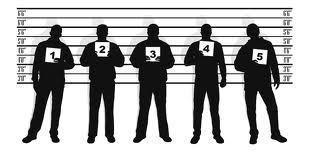
1. What are the different types of pretrial lineups?
When law enforcement is trying to get a witness to identify a potential suspect, they may use many different kinds of “lineups” in order to get a successful identification.
1.1 What is a live witness identification?
The method of witness identification most people are familiar with is the “live lineup.” In this type of identification:
- the witness views the suspect
- along with several other people
- whose physical appearance resembles that of the suspect’s.1
This type of process is most likely to be used when the suspect is already in custody or is willing to participate. The people who show up alongside the suspect are called “fillers.” Ideally, there are at least 6 fillers in addition to the suspect.2
1.2 What is a photo lineup?
A photo lineup occurs with the witness being shown pictures of the suspect and a number of other fillers (usually 6 in Colorado). The photos are usually:
- booking photos; or
- driver’s license photos.3
This process is usually used when:
- the suspect is not yet under arrest, or
- the suspect’s appearance has changed after the crime occurred.
While photos are often considered less reliable than a live identification, these can still be used in a Colorado criminal trial.
1.3 What is a “showup” or “accidental encounter?”
In this type of procedure, there are no fillers. The witness is shown only the suspect and asked whether he or she was the person who committed the alleged crime.4
While this method is permitted, it is considered one of the least reliable forms of identification because it is suggestive. However, juries are often given this evidence and told to consider it for what it is worth.
This method is highly suggestive, and it can be challenged at trial.
2. What are the legal requirements of a pretrial lineup?
Certain legal requirements are imposed upon these identification procedures in order to attempt to make them more reliable. However, human memory is not very reliable, especially when the person is under the stress of the incident that just occurred.5
In Colorado, certain requirements of these identification procedures are required in order for them to be admissible at trial.
2.1 Using Similar Looking Fillers
Due process of law requires that a lineup not be “impermissibly suggestive so as to create a likelihood of an unreliable identification.”6
Fillers in a live or photographic witness identification should use subjects reasonably the same in:
- race
- height
- weight
- appearance, and
- age.
Example: Misty was just robbed at gunpoint by a man she described as “African-American, tall, and skinny.” The police suspect Anthony of the crime (and he matches Misty’s description).
In the live lineup, police put in 6 other people, 5 of whom are white and one who is Chinese. All of them are shorter than the suspect. These fillers do not look at all like Anthony, which is impermissibly suggestive. The evidence of Misty’s identification of Anthony could be kept out of evidence at trial.
2.2 Sequential Lineups
A sequential lineup requires a witness to look at each individual person (or photograph of a person) one at a time. The witness then says “Yes” or “No” to each person individually.
Research suggests that this type of identification is more reliable than others. A lineup does not have to be sequential in order to be admissible, but those that are not can have their validity challenged at trial.
2.3 Double-Blind Administration
The person who is with the witness at the time of identification should not know who the suspect is. This helps keep any accidental clues from being given to the witness, which might be suggestive.
Failure to use a double-blind procedure will not always invalidate a lineup but may be useful in challenging it as evidence.
3. Do I have the right to an attorney during a witness identification?
Only in a live lineup does a suspect have a right to have an attorney present during the procedure.
The 6th Amendment to the United States Constitution guarantees the right to counsel at “critical stages” of the prosecution. A live lineup is considered a “critical stage.”7
4. How can I challenge the procedures for a pretrial identification?
When the procedures for police lineups or other witness identification have not been followed or were unfair, they can be challenged in court.
4.1 What is a motion to suppress evidence?
A motion to suppress evidence is a method of petitioning the court to:
- prevent the admission of the lineup
- as evidence against the defendant
- at trial.
A motion to suppress evidence will only be granted if the court finds that the lineup was unconstitutionally suggestive, unfair, or flawed. With the help of legal counsel, you can challenge the procedures law enforcement used in the lineup.
4.2 How do I show the procedure was tainted?
The process for suspect identification can be shown to be tainted in a number of ways, including but not limited to:
- the process was unduly suggestive;
- the results were unreliable;
- the witness was not certain in his or her identification;
- fillers did not look similar to the suspect;
- too much time had elapsed between the crime and the lineup; or
- the witness’s senses were not reliable (eyesight problems, deafness, person with special needs, etc.).
Proving any of the above can cause the court to prevent the admission of the lineup as evidence at trial. However, even when the judge allows it in as evidence, it can be challenged in front of the jury to show that it was unreliable and that they should not base their decision upon it.
Call us for help…
For questions about police lineups and witness identification or to confidentially discuss your case with one of our skilled Colorado criminal defense attorneys, do not hesitate to contact us. (For cases in California, please see our page on police lineups and Evans Motions in California).
We represent clients in and around Denver, Colorado Springs, Aurora, Fort Collins, Lakewood, and several nearby cities.
Legal References:
- People v. Ridenour, 878 P.2d 23 (Colo.App.1994); People v. Bolton, 859 P.2d 311 (Colo.App.1993); People v. Walford, 716 P.2d 137 (Colo.App.1985).
- 15 COPRAC 14.53 (Lineup requests and objections).
- 15 COPRAC 14.45 (Photographic lineups).
- 15 COPRAC 14.44 (Showups and “accidental” encounters).
- See, e.g., Manson v. Brathwaite (1977) 432 U.S. 98, 112. (“Usually the witness in a police pretrial lineup must testify about an encounter with a total stranger under circumstances of emergency or emotional stress. The witness’ recollection of the stranger can be distorted easily by the circumstances or by later actions of the police.”)
- 15 COPRAC 14.41 (Lineups).
- Moore v. Illinois, 434 U.S. 220, 98 S.Ct. 458, 54 L.Ed.2d 424 (1977); People v. Best, 665 P.2d 644 (Colo.App.1983). See also Carver v. Alabama, 577 F.2d 1188, 1195 (5th Cir.1978) (even if arrest is for offense with which defendant is eventually charged, Sixth Amendment right to counsel does not attach at lineup post-arrest, but before formal charge is filed).